
Achieving high productivity at work is less about working harder and more about working smarter. One of the most effective ways to do that is by organizing your routine in a way that maximizes your energy, focuses your efforts, and eliminates unnecessary distractions.
In this article, you’ll learn practical strategies, real-life structure examples, and tested techniques to help you produce better results—with less stress and more clarity.
The Importance of Routine for Professional Success
A well-organized routine helps you maintain consistency, reduce decision fatigue, and develop habits that lead to long-term success.
According to a study from Harvard Business School, professionals who structure their time around daily habits experience significantly less stress and greater goal achievement.⁽¹⁾
When your day is structured, you spend less time deciding what to do next—and more time actually doing it.
Start with a Morning Routine That Energizes You
The way you start your day matters. A strong morning routine can boost your focus, mood, and energy for the entire day.
Here’s what an effective morning might look like:
- Wake up at the same time every day (preferably before 7 AM)
- Stretch or move your body for 15–30 minutes
- Eat a nourishing breakfast (with protein + fiber)
- Review your top 3 priorities for the day
- Avoid emails, news, or social media during the first hour
This time is for mental clarity—not for chaos.
Case Study: Maria’s High-Performance Routine
Maria, a senior marketing manager at a tech company, struggled with scattered focus and constant reactivity. After working with a productivity coach, she shifted her routine.
Here’s what changed:
- 6:30 AM: Wake, hydrate, light stretching
- 7:00 AM: 20-minute journaling + reviewing priorities
- 8:00 AM: Deep work block begins (no meetings before 10 AM)
- 12:00 PM: Walking lunch + break from screens
- 1:00 PM – 3:00 PM: Collaboration block (calls, Slack, meetings)
- 3:30 PM – 5:00 PM: Admin work + closing checklist
- 6:00 PM: Device shutdown routine
Result? Maria increased her task completion rate by 40% in one quarter and reported less decision fatigue and better sleep.
Plan Your Day the Night Before
Productivity begins the day before.
Spend 5–10 minutes each evening:
- Reviewing accomplishments
- Listing tomorrow’s top 3 priorities
- Blocking time on your calendar
This creates a sense of control and lets you start your morning without stress.
Break Your Day Into Blocks
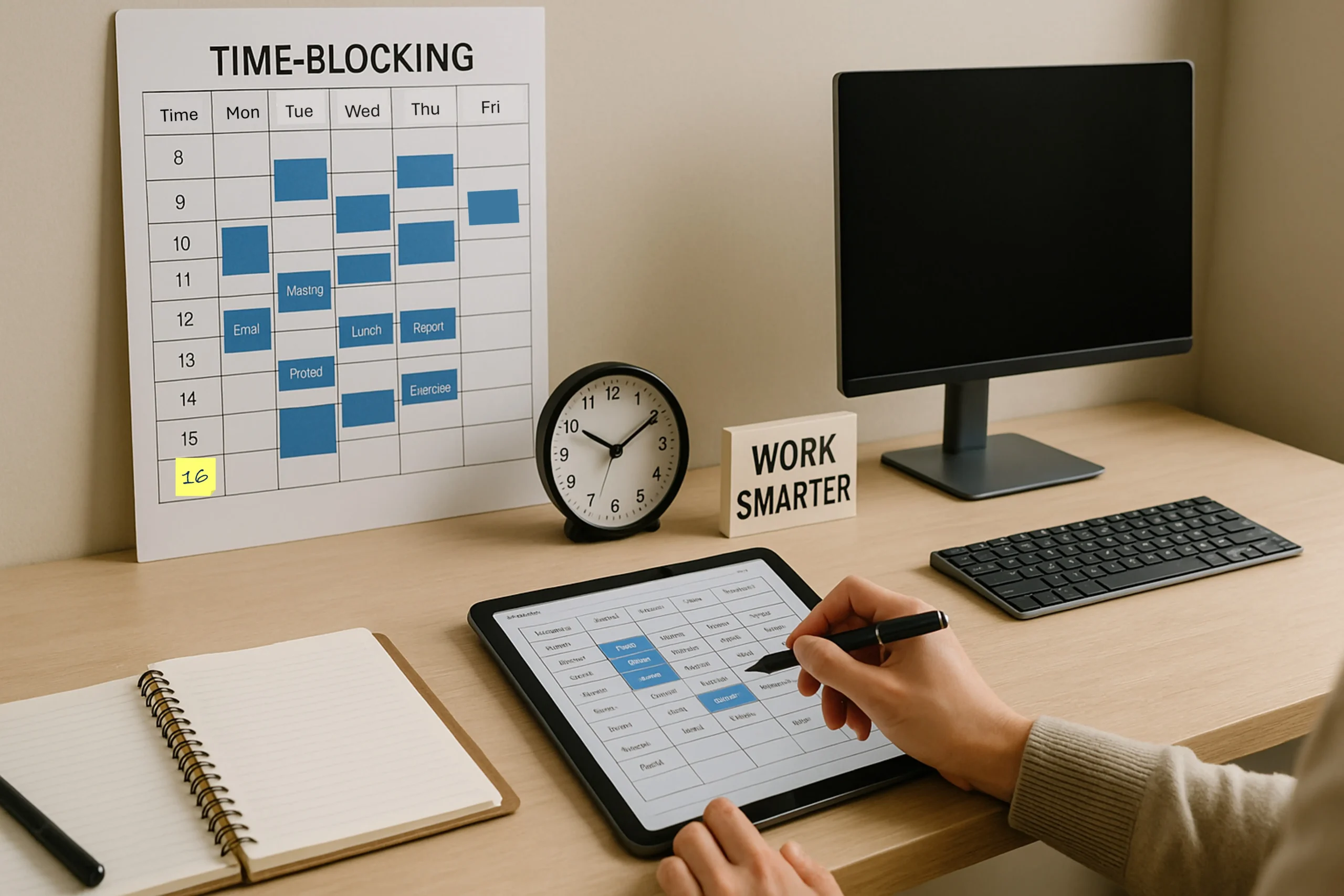
Time-blocking is one of the most effective techniques for maintaining momentum.
Here’s a recommended structure based on cognitive energy patterns:
- Morning (8 AM – 11 AM): Deep work, strategy, creative tasks
- Late Morning (11 AM – 12 PM): Admin work, short calls
- Early Afternoon (1 PM – 3 PM): Meetings, collaboration
- Late Afternoon (3 PM – 5 PM): Shallow work, wrap-up tasks
- Evening: Reading, learning, or disconnecting
Working with your natural rhythm—rather than against it—creates sustainable productivity.
You can adapt this template using tools like Google Calendar or Notion.
Set SMART Goals for the Week
Weekly clarity = daily direction.
Use the SMART method to set:
- Specific: “Write article draft for website”
- Measurable: “Complete 1000 words”
- Achievable: “By Thursday noon”
- Relevant: “It supports our next product launch”
- Time-bound: “Block time Wednesday 9 AM–11 AM”
Break large projects into 1–3 hour blocks. This builds momentum without feeling overwhelmed.
Eliminate Distractions and Focus on One Task at a Time
Multitasking kills productivity. It leads to task-switching costs, where your brain loses time re-focusing each time you jump between tasks.
Set yourself up to win:
- Silence non-essential notifications
- Use Focus Keeper or Forest to stay locked in
- Let coworkers know your “deep work” hours
- Use browser blockers like StayFocusd
Build In Time for Breaks and Rest
Breaks are essential for sustained output.
Try the 52/17 method: Work for 52 minutes, rest for 17. Or use the classic Pomodoro Technique: 25/5-minute intervals with a longer break every 4 rounds.
During breaks:
- Stand and stretch
- Drink water or grab a snack
- Take a short walk
Even 5 minutes of movement can refresh mental clarity.
Reflect and Adjust Weekly
Every Friday (or Sunday night), ask yourself:
- What worked well this week?
- Where did I feel overwhelmed?
- What routines supported me?
- What adjustments would improve next week?
Routine isn’t about rigidity—it’s about rhythm. Keep evolving your structure to match your needs and goals.
Use Technology to Stay on Track
Tech should support your brain, not compete with it.
Recommended tools:
- Trello or Asana – task tracking
- Notion – centralized dashboard
- RescueTime – time audit + reports
- Calendly – no more back-and-forth scheduling
Choose 1–2 key tools and use them consistently. Simplicity beats overengineering.
Balance Structure with Flexibility
Life happens. Schedules change. Meetings shift. And that’s okay.
Your routine should adapt with you—not become a source of pressure.
Build in:
- Buffer blocks for overflow or urgent tasks
- Admin days to catch up or reset
- Weekly review time to realign
Flexibility is a strength—not a failure of discipline.
Organized Routines Lead to Organized Results
A scattered day creates scattered work. But a well-structured routine builds:
- Focus
- Flow
- Fulfillment
You don’t need to control every second. But by creating a strong foundation—morning routines, time blocks, clear goals—you free your mind to create, lead, and deliver.
Because structure isn’t about doing more.
It’s about doing the right things, at the right time, with energy and intention.